OPTIMIZE THE PERFORMANCE OF YOUREQUIPMENT WITH OUR MANUFACTURING
Hydraulic cylinders are essential components in a wide variety of industrial machinery and heavy equipment, ranging from cranes to presses and excavators.
These mechanical parts allow hydraulic energy to be converted into linear motion, playing an essential role in industries such as mining, automotive, cement and renewable energy.
But do you know exactly what they are and what they’re used for? In this article, you’ll learn all about hydraulic cylinders and their importance in the industrial world.
What are hydraulic cylinders?
This is a mechanical device that transforms the energy of pressurized hydraulic fluid into controlled linear motion. It consists of cylindrical tubes containing a piston, which moves back and forth when subjected to fluid pressure. This motion is used to generate force or move objects.
Hydraulic cylinders are well known for their ability to produce quite powerful and accurate forces within a compact space, making them ideal for applications that require controlled movements under high loads.
What are the main parts of a hydraulic cylinder?
To understand how these cylinders work, it is very important to know what their basic components are:
- Piston: the moving part inside the cylinder that causes linear motion.
- Tube or barrel: contains the hydraulic fluid and houses the piston.
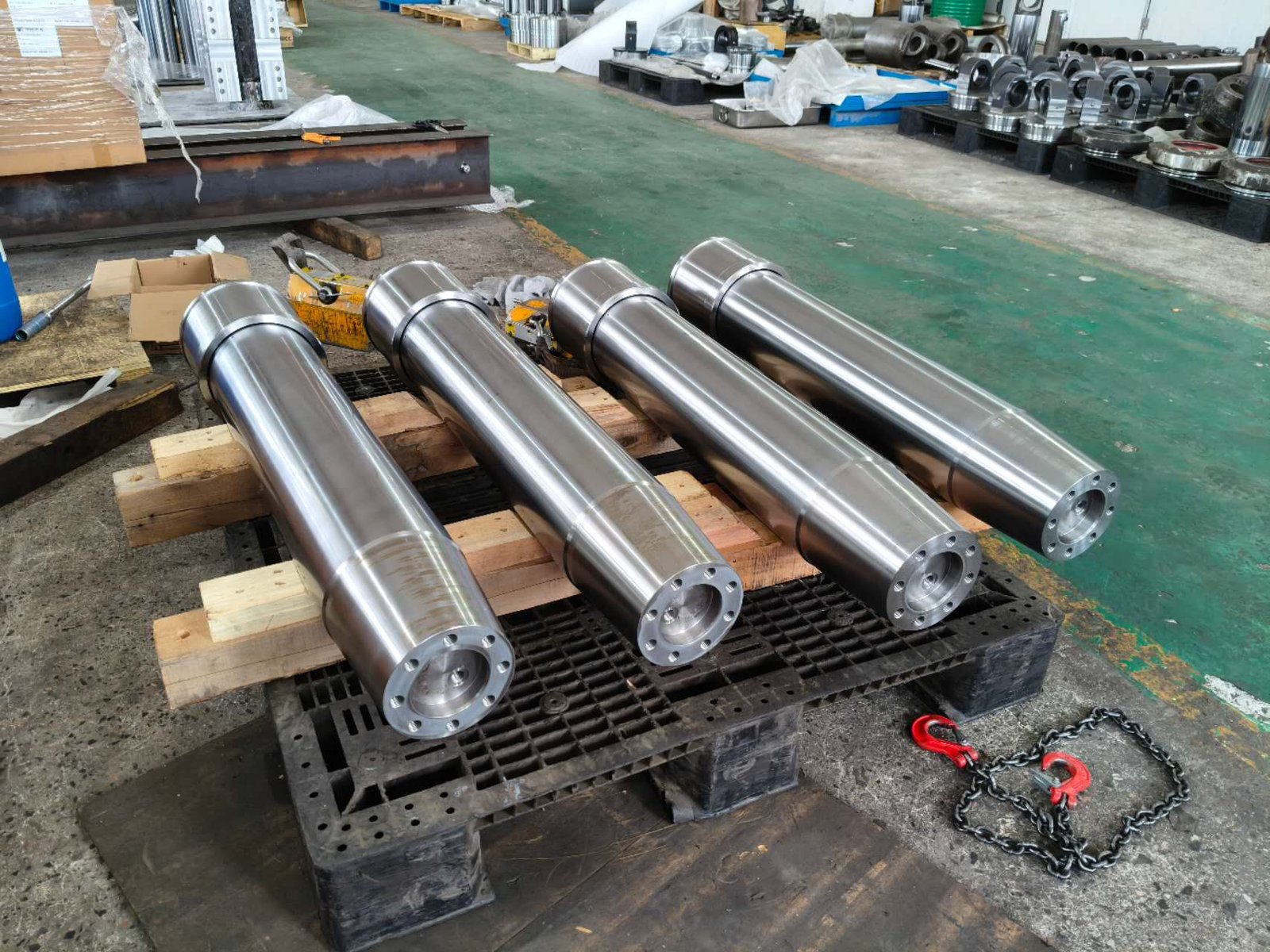
- Chrome-plated rods: provide support to the piston and withstand the applied loads.
- Hydraulic seals : these prevent fluid leaks and maintain internal pressure.
- Caps and anchors: these are responsible for closing the cylinder and connecting it to the working structure.